
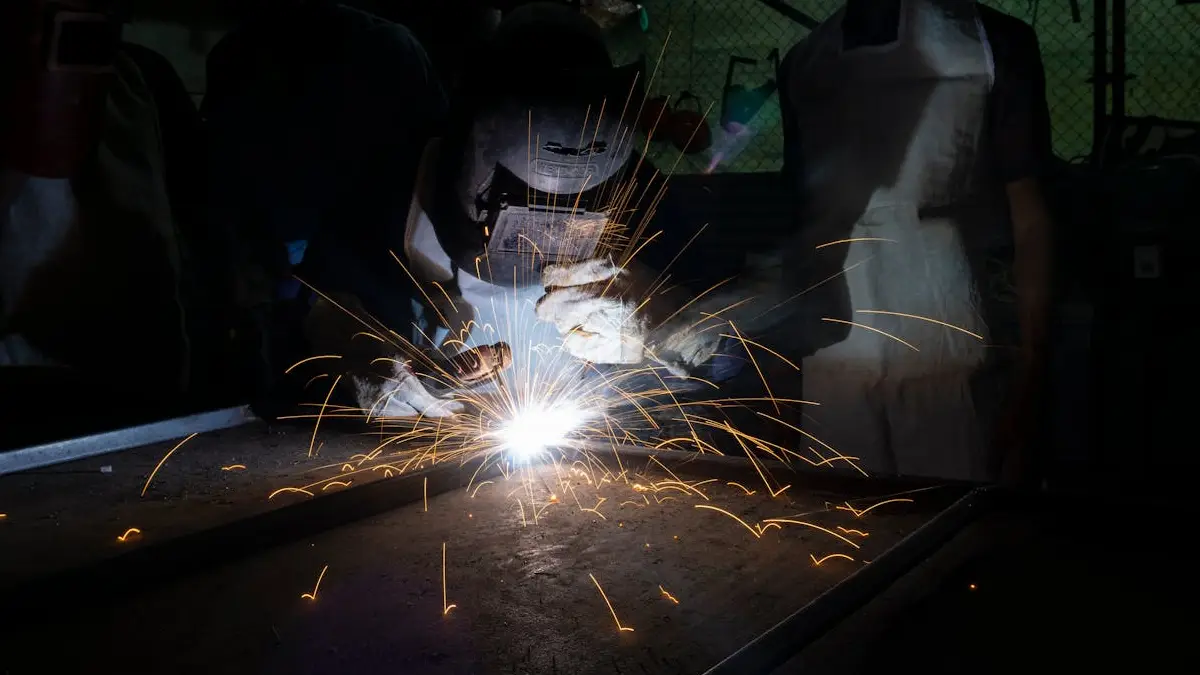

In Australia, one of the most consistent variables affecting that chain is where fabrication happens.
When fabrication is local, timelines behave differently. Not faster in every case, but more predictable, more adjustable, and less exposed to external disruption.
This is not theoretical. It shows up in how commercial and industrial builds are planned, staged, and delivered across the country.
Why Local Fabrication Matters for AEC Projects
Architecture, Engineering, and Construction (AEC) projects depend on coordination across multiple disciplines. Architects develop the design intent, engineers ensure structural performance, and contractors manage delivery on site.
When fabrication is delayed or disconnected from these teams, project timelines can quickly slip. Local fabrication helps bridge that gap by improving communication, shortening feedback loops, and aligning production with real construction schedules.
For many Australian commercial and industrial builds, that coordination is just as valuable as the material itself.
Where Fabrication Sits in the Timeline
Fabrication is not a late-stage activity. It sits between design finalisation and on-site assembly.
It involves cutting, shaping, and assembling materials, often steel, into components that are ready to install. This is closely tied to prefabrication, where elements are built off-site and delivered as completed units rather than raw materials.
That shift from on-site construction to off-site fabrication changes how time is allocated.
Instead of:
Design → Material delivery → On-site fabrication → Installation
You get:
Design → Fabrication → Delivery → Installation
This removes several steps from the site itself, but it also introduces dependency on fabrication scheduling and delivery timing.
Why Local Fabrication Changes the Timeline Structure
The most immediate impact of local fabrication is on time certainty.
Reduced Transport Delays
Imported materials introduce variables that are difficult to control:
- Shipping schedules
- Port congestion
- Customs clearance
- Long-distance logistics
Local fabrication removes those layers. Materials move shorter distances, often within the same region, reducing the likelihood of delays.
Projects using local fabrication can run on tighter schedules because transport becomes predictable.
Just-in-Time Delivery Becomes Viable
Local fabricators often operate on a just-in-time basis, producing and delivering components aligned with project stages.
This allows:
- Reduced on-site storage requirements
- Lower risk of damage or misplacement
- Better sequencing of installation
Instead of stockpiling materials early, projects receive components when they are needed.
That changes how timelines are structured. Work becomes more continuous rather than staged around large deliveries.
Faster Response to Design Changes
Design changes are common in commercial projects.
When fabrication is offshore, changes introduce delays. Components may need to be reworked, reordered, or shipped again.
With local fabrication, adjustments can be made quickly.
Fabricators can:
- Modify components before delivery
- Coordinate directly with engineers
- Implement changes without restarting the supply chain
This flexibility reduces the time lost to rework and redesign.
How Local Fabrication Supports BIM and Design Coordination
Many modern AEC projects now rely on BIM workflows to reduce clashes, improve documentation accuracy, and coordinate trades before construction begins.
Local fabrication can strengthen this process by allowing fabricators to work directly from coordinated drawings or approved models.
That makes it easier to identify issues early, confirm dimensions, and reduce costly rework once materials arrive on site.
Where BIM and fabrication are aligned, timelines tend to become more predictable.
How Local Fabrication Connects to Commercial Steel Builds
In Australia, many commercial and industrial projects rely on structural steel systems. These are often fabricated locally to align with engineering standards and site conditions.
Many work with Core Steel commercial buildings because they’re structured around full design-and-build integration, meaning the same team handles design, engineering, fabrication, and construction. That reduces fragmentation across the project and keeps timelines aligned with actual site requirements.
Local providers of commercial steel structures operate within the same regulatory and logistical environment as the project itself. Coresteel’s approach focuses on tailoring buildings to workflow, access, and long-term use, with flexible layouts, large clear spans, and durability built into the system from the start.
Why Steel Fabrication Benefits From Being Local
Steel fabrication is highly sensitive to accuracy and compliance.
In Australia, steel is not just a common material, it is a practical response to local conditions. Seismic activity requires structures that can flex without failing, and engineered steel systems are well-suited to that.
At the same time, large clear spans are often needed in commercial and industrial buildings, which steel can provide without excessive internal support. The country also has an established domestic steel industry, which supports local supply and fabrication rather than relying entirely on imports.
Local fabrication offers:
- Alignment with general building codes from the start
- Reduced need for post-delivery modification
- Better quality control through proximity
Imported steel may require adjustments to meet local standards, which adds time to the project. Local fabrication avoids that step entirely.
Integration With Project Scheduling
Steel components are often central to the build sequence.
They define:
- Structural framing timelines
- Installation order
- Coordination with other trades
When fabrication is local, these components can be delivered in sequence, supporting a more controlled installation process.
This reduces idle time between stages.
Timeline Compression Through Off-Site Work
One of the less obvious effects of local fabrication is the shift of work away from the site.
Parallel Work Streams
Fabrication happens off-site while site preparation continues.
This creates parallel workflows:
- Foundations and site work proceed
- Structural components are fabricated simultaneously
When both are ready, installation can begin immediately. This overlap shortens overall project duration.
Reduced On-Site Complexity
On-site fabrication introduces variability. Weather, labor availability, and site constraints can slow progress.
Off-site fabrication avoids these issues by moving work into controlled environments, where:
- Conditions are consistent
- Equipment is specialised
- Processes are standardised
This improves efficiency and reduces delays caused by external factors.
Where Local Fabrication Reduces Risk
Timeline delays are often tied to risk events rather than routine processes. Local fabrication reduces several key risks.
Compliance and Rework Risk
Imported components may not fully meet Australian standards.
This can lead to:
- Inspection failures
- Required modifications
- Delays in approval
Local fabrication ensures compliance from the start, reducing the likelihood of rework.
Quality Control Issues
Quality problems are harder to address when fabrication is remote. Defects discovered on arrival can halt progress while replacements are arranged.
Local fabrication allows:
- Immediate inspection
- Faster correction of defects
- Direct communication with fabricators
This reduces downtime caused by quality issues.
Supply Chain Disruptions
Global supply chains introduce uncertainty. Currency fluctuations, shipping delays, and geopolitical factors can all impact timelines. Local fabrication removes many of these variables, stabilising the supply chain.
Where Local Fabrication Does Not Automatically Improve Timelines
Local fabrication is not a universal solution. There are scenarios where it introduces constraints.
Capacity Limitations
Local fabricators have finite capacity. Large projects may compete for the same resources, leading to scheduling conflicts. If demand exceeds capacity, fabrication timelines can extend.
Cost vs Speed Trade-Off
Local fabrication may have higher upfront costs compared to imported options.
In some cases, projects prioritise cost over speed, accepting longer timelines in exchange for lower material costs.
Coordination Requirements
Just-in-time delivery requires precise coordination. If scheduling is misaligned, delays can still occur. Local fabrication improves flexibility, but it does not eliminate the need for planning.
Why Australian AEC Firms Prioritise Delivery Certainty
For many Australian AEC firms, meeting deadlines is just as important as controlling costs. When one stage is delayed, other trades may need to wait, creating extra costs and pressure across the project.
This is especially important on commercial and industrial builds where structural works, services, fit-outs, and handover stages depend on accurate sequencing.
Australia also faces challenges such as long transport distances, labour shortages, weather disruptions, and supply chain delays. Because of this, many firms value suppliers who can offer reliable lead times and predictable delivery.
Local fabrication can support that certainty by reducing delays and helping projects stay aligned with planned milestones.
What Actually Changes in Practice
When local fabrication is integrated effectively, timelines become more stable rather than simply shorter.
Projects experience:
- Fewer unexpected delays
- Better alignment between stages
- Reduced need for contingency time
The difference is not always visible in total duration. It is visible in consistency.
Why Australia Is Structured Around Local Fabrication
Australia’s construction environment reinforces the value of local fabrication.
Factors include:
- Long supply chains for imported materials
- Strict building and engineering standards
- Limited tolerance for project delays
- Regional logistics challenges across large distances
The local steel industry supports this by providing reliable, domestically produced materials tailored to national requirements.
This creates an environment where local fabrication is often a practical way to improve delivery certainty, compliance, and scheduling control for many projects.
The Sequence That Defines Timeline Outcomes
When timelines are analysed across projects, a pattern emerges. Delays rarely start at installation. They start earlier, in procurement and fabrication. Local fabrication shifts that early stage from a variable process to a controlled one.
The sequence becomes:
- Design aligns with local standards
- Fabrication proceeds without compliance adjustments
- Delivery follows predictable timelines
- Installation begins without waiting for corrections
Each step reduces uncertainty in the next.
What Determines Whether It Works
Local fabrication changes timelines when it is integrated into the project strategy.
That requires:
- Early involvement of fabricators in design
- Alignment between fabrication and construction schedules
- Clear communication across all stages
Without that integration, the benefits are reduced.
Why Timelines Behave Differently
The key difference is not speed. It is control. Local fabrication reduces external dependencies and increases responsiveness. That changes how projects behave under pressure.
Instead of reacting to delays, teams can adjust in real time.
In a construction environment where timelines are shaped by multiple variables, that level of control is what ultimately determines whether a project stays on track.


