
Key Takeaways
- High warehouse density in AEC operations directly causes inventory data problems, not just slower movement.
- Dense racking and narrow aisles force equipment changes that reduce throughput even when total storage increases.
- Manual processes like spreadsheets and WhatsApp requests fail at scale in dense warehouse environments.
- Missing one material can cascade delays across multiple trades, making warehouse accuracy a project-critical issue.
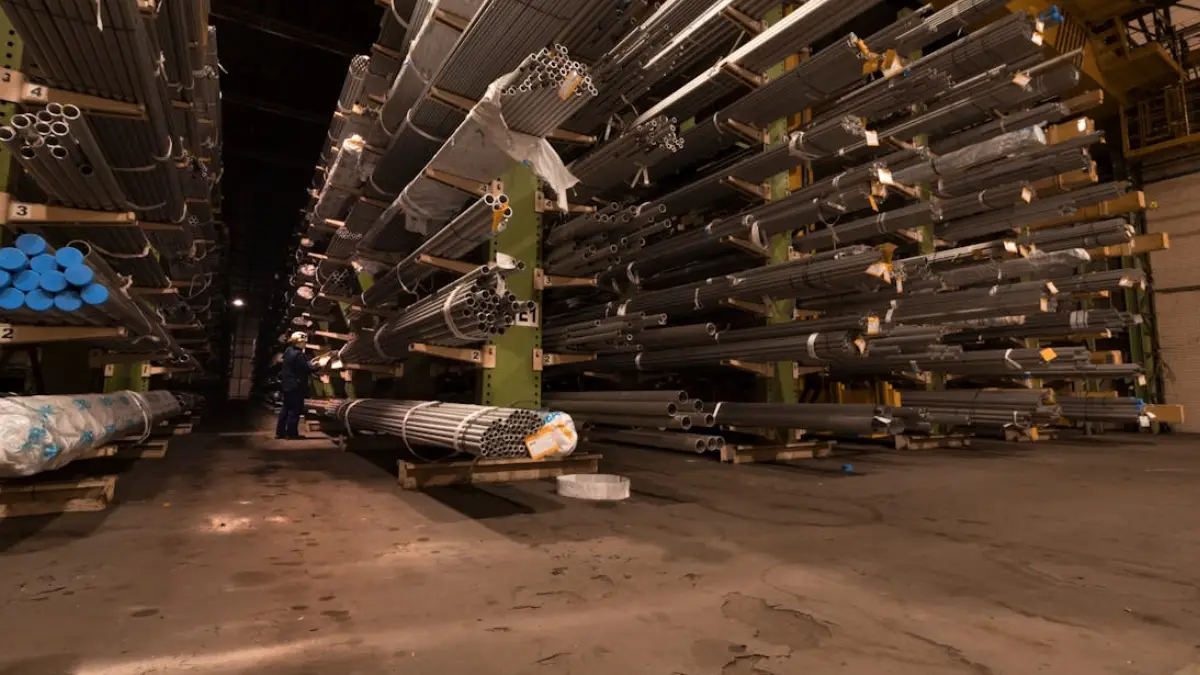
Warehouses are not designed in a vacuum. For AEC firms, they are shaped by land cost, zoning limits, project timelines, and the pressure to keep materials close to active construction sites. That often leads to one consistent outcome: higher storage density.
On paper, higher density looks efficient. More inventory in the same footprint. Better use of rent. Shorter distances between storage and dispatch.
In practice, it changes how loads move, how equipment operates, and where data problems begin to appear.
For architecture, engineering, and construction businesses, warehouse inefficiency is rarely limited to storage. It can affect site deliveries, labour productivity, subcontractor scheduling, and project timelines.
What Storage Density Means in an AEC Context
Storage density is about how much usable inventory is placed within a defined space relative to:
- access paths
- handling equipment
- dispatch zones
- operational flow
- retrieval speed
For AEC firms in Australia, density tends to increase for two main reasons.
High Land and Lease Costs
Industrial land near transport corridors, ports, and project zones is limited. Expanding warehouse footprint is expensive, so businesses maximise internal capacity instead.
Project Supply Expectations
Construction projects require materials to be available quickly. Many firms hold more stock closer to demand points, compressing available space further.
The result is a layout where:
- aisles become narrower
- racking extends higher
- staging zones shrink
- overflow storage becomes common
This is where physical constraints start creating digital problems.
Where Density Starts Affecting Load Movement
Higher density changes the basic mechanics of moving goods.
Aisle Width and Turning Constraints
As aisles narrow, equipment selection becomes restricted. Standard forklifts require wider turning radii. When those radii are not available, operators either slow down or switch to specialised equipment.
Slower movement is not just about speed. It increases handling time per pallet, which compounds across hundreds of movements per day.
Vertical Storage and Retrieval Time
Higher racking increases storage capacity but also increases retrieval complexity.
Loads stored at height require more precise positioning and longer lift cycles. Operators spend more time aligning forks, stabilising loads, and lowering them safely.
That added time reduces throughput even if total storage increases.
Congestion Points Inside the Facility
Dense layouts reduce open space where loads can be staged.
This creates bottlenecks at:
- End-of-aisle positions
- Loading docks
- Cross-aisle intersections
For AEC businesses, this can delay urgent material dispatch to active sites.
Where Data Problems Usually Start
As warehouse movement becomes more complex, data accuracy becomes harder to maintain.
Lost Inventory Visibility
Materials may still exist in the warehouse but cannot be found quickly.
Common examples include:
- items moved without updates
- overflow stock stored outside assigned zones
- inaccurate rack locations
- spreadsheet stock counts no longer matching reality
Wrong Materials Sent to Site
Many construction materials look similar but serve different purposes.
Examples:
- different steel grades
- wrong cable type
- incorrect fittings
- outdated component versions
When picking processes are manual, errors increase.
Delays Between Warehouse and Site Teams
Project teams need fast answers:
- Has it arrived?
- Is it allocated?
- Can it be delivered today?
- How many units remain?
Without real-time systems, warehouse teams rely on calls, messages, and manual checks.
Manual Processes Break at Scale
What works in a smaller warehouse often fails in dense operations:
- paper forms
- whiteboards
- WhatsApp requests
- verbal handovers
- double-entry spreadsheets
Why AEC Firms Feel the Impact Faster
Warehouse issues affect every industry, but AEC firms often feel them sooner because materials are tied directly to project sequencing.
One missing item can delay:
- framing work
- HVAC installation
- electrical rough-in
- façade assembly
- handover milestones
Unlike retail delays, construction delays often cascade across multiple trades.
Equipment Choice Under High Density Conditions
At a certain point, layout constraints force a change in equipment strategy.
Standard forklifts are not always suited to tight aisles, vertical storage, or mixed indoor-outdoor environments. That is where alternative lifting solutions often become necessary.
For AEC firms managing dense warehouses or project storage yards, equipment selection directly affects both movement speed and inventory control. If loads cannot be accessed efficiently, delays are created before any data system can solve them.
Why Telehandlers Start Appearing in Dense Operations
In some Sydney operations, particularly those dealing with mixed storage or outdoor yard space, telehandlers become part of the workflow.
Unlike traditional forklifts, telehandlers extend forward and upward, allowing operators to reach loads that are not directly accessible from a straight-on position.
This matters in high-density environments where:
- Access angles are limited
- Loads are stored deeper within racks or stacks
- Space for repositioning is minimal
Operators use telehandlers to reduce repositioning cycles, which helps maintain flow even when space is constrained.
For facilities that need flexibility in handling without committing to permanent equipment changes, short-term telehandler hire becomes practical.
Matching Equipment to Layout Instead of Forcing Movement
The key shift is simple: equipment should match the layout, not the other way around.
When density increases, forcing standard equipment into tight spaces often leads to:
- higher wear and tear
- increased handling time
- greater risk of minor collisions
- product or material damage
- more operator frustration
- slower dispatch cycles
Adjusting equipment strategy reduces these risks and helps stabilise throughput.
For AEC businesses, it also helps maintain predictable delivery schedules to active project sites.
Layout Decisions That Influence Handling Efficiency
Density alone does not determine performance. How that density is structured matters more.
Slotting Strategy and Access Frequency
Not all inventory should be treated equally.
High-turn items need to be placed closer to dispatch zones with easier access. Low-turn items can be stored higher or deeper within the layout.
When this is not managed correctly, operators spend time retrieving low-priority items while high-frequency goods compete for access.
That imbalance creates unnecessary movement.
Cross-Aisle Placement and Flow Design
Cross-aisles act as pressure relief points in dense layouts.
Without them, operators are forced to travel the full length of aisles before changing direction. With them, movement becomes more flexible.
In Sydney and Melbourne warehouses where density is high, cross-aisle placement directly affects:
- Travel distance
- Traffic flow
- Collision risk
Dock Positioning and Load Staging
Loading docks are often the most constrained areas in dense facilities.
If staging space is limited, inbound and outbound loads overlap. That overlap slows both processes.
Proper dock positioning, combined with minimal but sufficient staging areas, helps maintain separation between incoming and outgoing goods.
For AEC firms, smoother dock flow means fewer delays between warehouse readiness and on-site execution.
Systems That Reduce Friction in Dense Warehouses
Once warehouse density increases, physical layout alone is no longer enough. Better systems become essential for maintaining speed, accuracy, and control.
For AEC firms, operational delays often begin when warehouse information is slow, fragmented, or unreliable.
Inventory Management Platforms
A modern inventory platform helps teams monitor:
- live stock levels
- storage locations
- movement history
- reserved project materials
- incoming deliveries
This reduces the time spent searching for materials or manually verifying stock.
Barcode and QR Tracking
Barcode or QR scanning improves movement accuracy during:
- goods receiving
- internal transfers
- picking and dispatch
- returns processing
Instead of relying on handwritten notes or memory, updates happen in real time.
Mobile Warehouse Access
Handheld devices or tablets allow warehouse teams to update stock directly from the floor.
That means fewer delays between physical movement and system updates.
Project-Based Allocation
AEC firms often support multiple sites from one warehouse. Systems that allocate stock by project code help prevent cross-project confusion and dispatch mistakes.
Infrastructure Still Matters
Even the best software still depends on reliable infrastructure. In dense warehouses, signal problems are common. High racking, steel materials, concrete walls, and large operating areas can all interfere with connectivity.
When coverage is weak, barcode scans may fail, mobile devices may disconnect, and system updates may be delayed. This creates gaps between what is happening on the warehouse floor and what appears in the system.
Efficient warehouse operations usually depend on strong Wi-Fi coverage, stable mobile connectivity, secure network access, and reliable cloud platforms that can be used across warehouse, office, and site teams.
Signs Your Warehouse Has Become a Data Problem
Many businesses do not identify warehouse data issues through reports. They notice them through daily frustration.
Stock may appear available in the system but cannot be found quickly. Urgent calls from project sites may become common. Dispatch mistakes may happen more often. Teams may still rely heavily on spreadsheets, while different departments work from different stock numbers.
In some cases, weekly reconciliations take too much time, and site teams begin to lose confidence in warehouse availability data.
When these signs appear together, the problem is usually bigger than storage space alone.
What AEC Firms Should Review
For warehouses operating under space pressure, regular reviews can help uncover hidden inefficiencies before they affect projects.
Businesses should look at how storage layout supports movement, whether current equipment still suits the space, and how accurate picking processes remain under daily pressure.
It is also important to review rack location discipline, project material allocation methods, dispatch communication workflows, and how well warehouse systems connect with office teams.
Wi-Fi coverage and mobile device performance across the facility should also be assessed, especially in dense storage zones.
Small improvements in these areas often lead to measurable gains in throughput, accuracy, and operational reliability.
Final Thought
Warehouse density is usually treated as a space issue. For AEC firms in Australia, it often becomes a movement issue first, then a data issue soon after.
Storage can be dense and still efficient, but only when layout, equipment, systems, and infrastructure work together.
When they do not, small warehouse delays can spread across project schedules, labour productivity, and client delivery timelines.