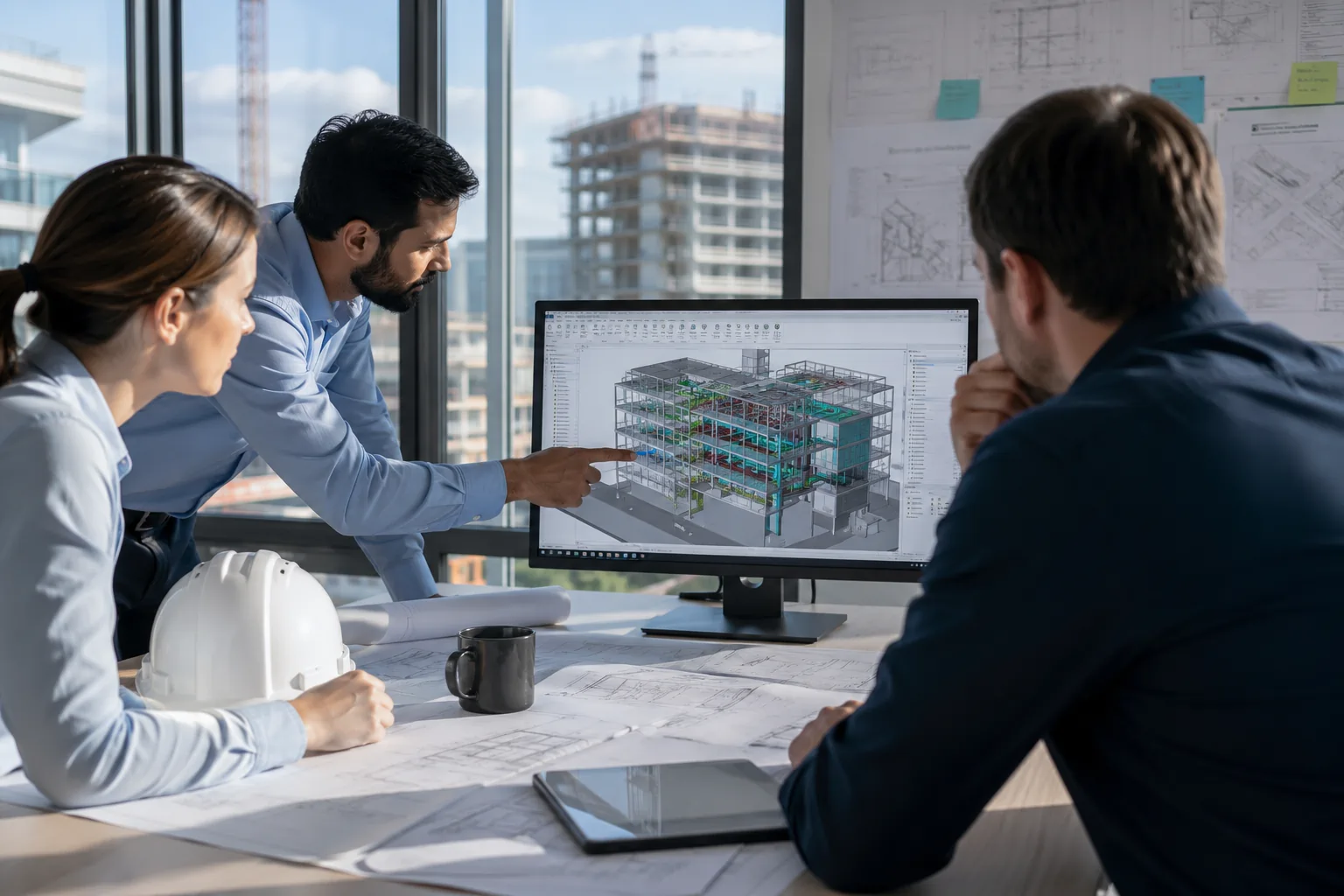

Digital engineering BIM becomes valuable when project information can support decisions beyond the design model. That is the shift many Australian AEC firms are working through.
BIM may begin as modelling, documentation, clash detection, or coordination. Digital engineering extends that work into a controlled information environment where models, data, approvals, and asset records support the full project lifecycle.
This article explains how digital engineering relates to BIM, where it fits, and how Australian AEC firms can build the capability without overcomplicating the workflow.
What Is Digital Engineering — And How Does It Relate to BIM?
Digital engineering is the wider project information system, and BIM is one of the main ways AEC teams create the model-based information inside it.
In simple terms, BIM helps teams build and manage the model, while digital engineering makes sure the information from that model can move through design, coordination, construction, handover, and operations without losing context.
The relationship between BIM in digital engineering matters on Australian AEC projects because information rarely stays inside one team.
As you know, in many cases, architects, engineers, contractors, subcontractors, and asset owners all need different parts of the same project record. If the model is not connected to clear workflows, approvals, and handover requirements, useful information can still become hard to trust.
The Digital Engineering Lifecycle: From Design to Operations
The digital engineering lifecycle moves information from early project intent into coordinated delivery records and usable asset data.
That lifecycle starts before major modelling work begins. The team first needs to know what information the project requires, who will rely on it, and when it must become trustworthy.
Without that early definition, teams can produce detailed models that still fail during tender, coordination, construction issue, or handover.
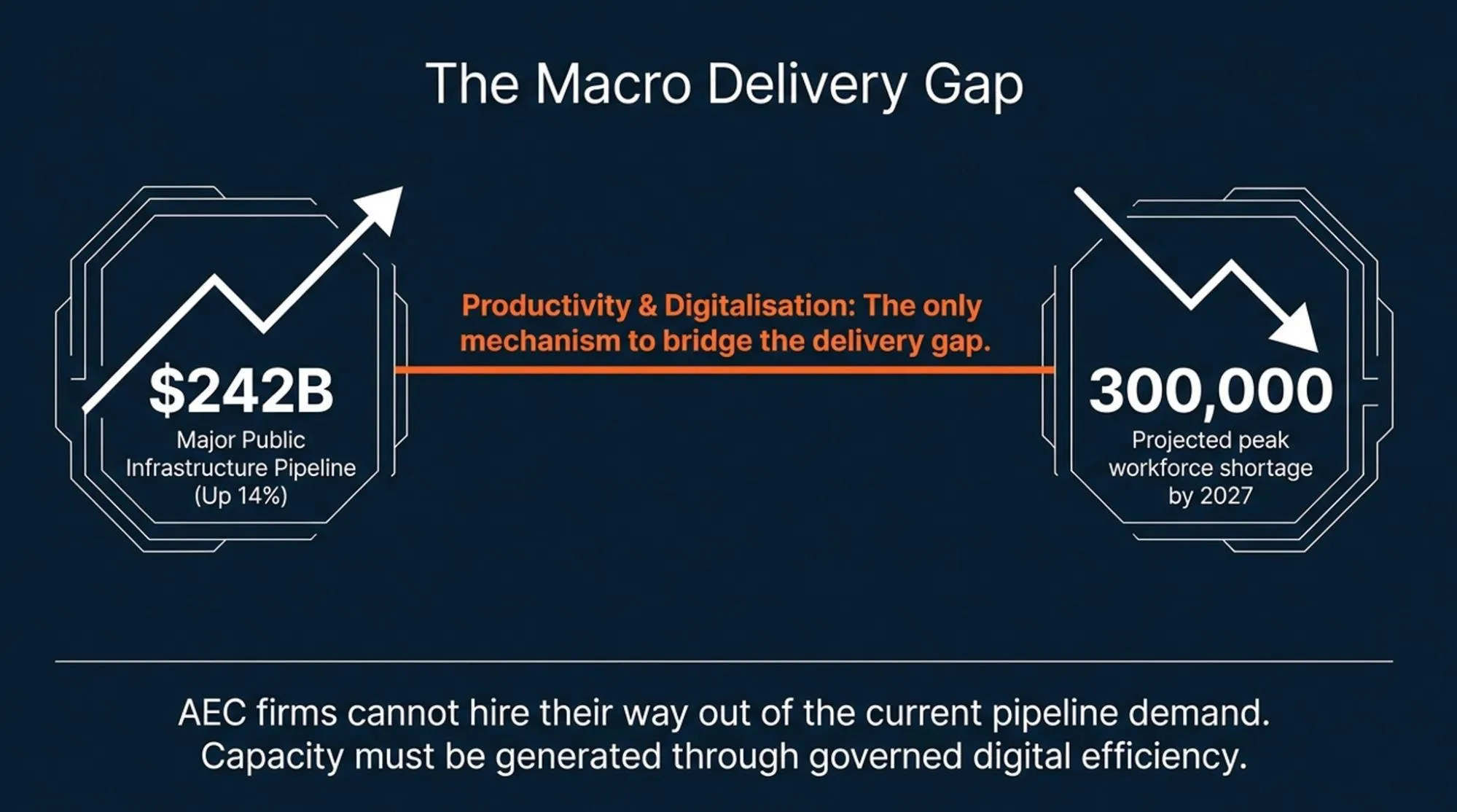
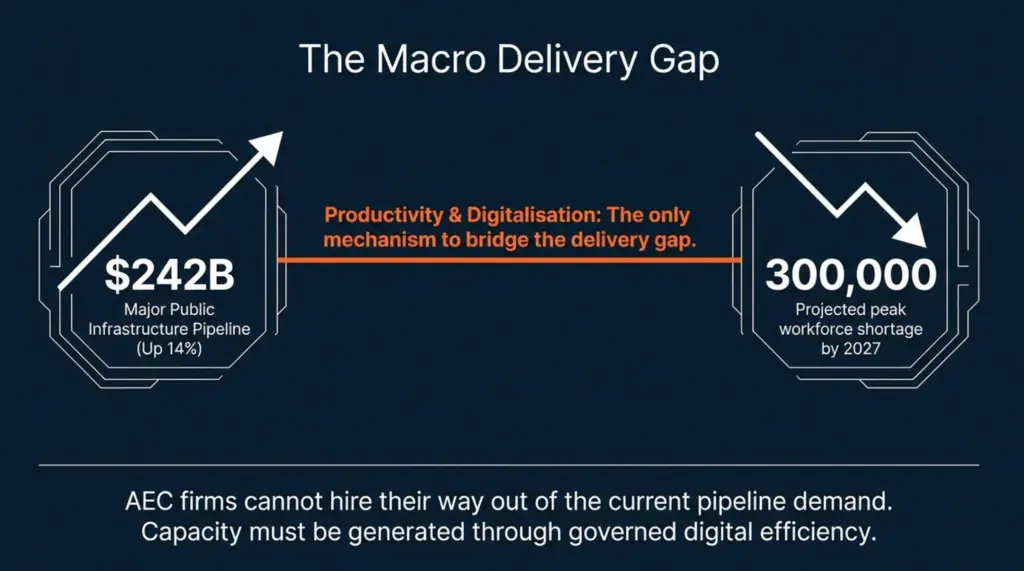
The Australian context makes this more important. Infrastructure Australia’s 2025 Infrastructure Market Capacity Report states that the five-year Major Public Infrastructure Pipeline increased by $29 billion to reach $242 billion.
That scale matters because more projects mean more consultants, contractors, subcontractors, approvals, handovers, and asset owners depending on information that stays reliable across each project stage.
And digital engineering BIM makes the information behind delivery easier to control. Let’s break down how.
| Stage | Main question | Digital engineering BIM task | Project-team check |
| Planning | What information will the project need? | Define requirements, responsibilities, exchange dates, and CDE rules | Client brief, tender scope, asset owner expectations |
| Design | How will disciplines produce reliable information? | Set model standards, coordinates, templates, and data requirements | Model setup, discipline inputs, file formats, review process |
| Coordination | How will issues be found and closed? | Federate models, run reviews, assign issues, track closeout | Clash tolerance, ownership, review cadence, approval rules |
| Construction | Which information is safe to use on site? | Publish accepted models, drawings, quantities, and work packages | Revision status, permissions, contractor access, superseded files |
| Handover | What information must remain useful after delivery? | Prepare asset data, model records, manuals, and operations information | Asset fields, O&M requirements, warranties, data completeness |
| Operations | How will asset information stay current? | Maintain asset information models and support digital twin use cases | Update ownership, system links, data governance |
This sequence is also where weak information control shows up late:
- A model may support coordination but still lack asset data for operations.
- Drawings may reach the site before the team has a clear view of revision status, approval state, or superseded information.
So, one useful starting question is simple: What decision will this information support later?
For example, a school upgrade may need room data, services information, access zones, maintainable assets, and handover documents to stay consistent. A commercial tenancy fit-out may need a lighter information model, with stronger focus on documentation control and future alteration records.
ISO 19650 and Digital Engineering in Australia
ISO 19650 gives Australian AEC teams a common way to manage BIM information across design, delivery, handover, and operations.
In Australia, ISO 19650 often appears through client BIM briefs, public-sector requirements, digital engineering execution plans, and procurement documents. NATSPEC frames it as a common framework for information management using BIM, while Infrastructure NSW connects it with CDE workflows, data governance, and asset lifecycle requirements.
The value of ISO 19650 is to helps project teams agree what information is needed, who is responsible for it, where it should be shared, and when it can be trusted.
For a mid-sized AEC firm applying ISO 19650 principles, the starting point does not need to be complicated. The first layer can focus on delivery controls the team can actually use:
- Clear naming rules
- Model status codes
- Folder permissions
- Exchange dates
- Approval roles
- A usable BEP
Core Technologies That Enable Digital Engineering
The core technologies that enable digital engineering include BIM authoring tools, coordination and review platforms, common data environments, data standards, reality capture, geospatial data, and digital twins.
Each technology supports a different handoff, from model creation and issue resolution to approval control, asset data, site verification, and operations.
BIM Authoring Tools
BIM authoring tools matter when model setup affects documentation quality, coordination reliability, and downstream data use.
Revit, Civil 3D, Tekla, Archicad, and similar platforms often sit in this layer. The bigger implementation risk usually sits in setup quality.
Teams should check templates, shared coordinates, family quality, parameters, classification, naming, and export requirements. A weak setup can create problems across documentation, coordination, scheduling, and handover.
Coordination and Review Platforms
Coordination and review platforms help teams bring models together, assign responsibility, and track resolution.
The platform should make ownership, status, and closeout visible, especially in contractor-led coordination where unresolved issues can affect procurement, shop drawings, and site sequencing.
The workflow matters more than the clash report. A long issue list is only useful when the team has agreed tolerances, priorities, closeout rules, and review timing.
Common Data Environments
A common data environment gives teams a controlled place to manage project information.
The CDE should support permissions, issue states, transmittals, revisions, approvals, and audit history. It should also help teams separate work-in-progress information from shared, published, and archived information.
This is often where project risk hides. The platform may already exist, but the rules may be unclear. The result is a digital folder structure that still depends on people remembering what is safe to use.
Data Standards and Classification
Data standards define what information needs to exist for models and asset records to remain useful.
That may include asset IDs, spaces, systems, equipment data, maintenance fields, warranties, classifications, and location references. The goal is to define the data that supports a real decision.
A contractor may need information for sequencing and procurement. An asset owner may need information for maintenance, compliance, capital planning, and future upgrades. The same model can support both needs if data requirements are set early enough.
Reality Capture, Geospatial Data, and Digital Twins
Reality capture and geospatial data connect project information to actual site conditions, while digital twins become relevant when asset owners have a clear operational use case for connected data.
Laser scanning, survey models, drone capture, GIS data, and point clouds can be useful on brownfield assets, infrastructure projects, refurbishment, and staged construction. They help teams compare design assumptions with physical conditions.
Then, the Digital Twin Victoria gives a local reference point, with the Victorian Government describing it as a $37.4 million investment in digital twin technology and spatial innovation over four years.
For AEC firms, the lesson is careful scoping. A digital twin should have a defined purpose, such as scenario testing, asset monitoring, planning, maintenance, or operational analysis. A richer 3D model alone will not create that value.
How to Build a Digital Engineering Capability in Your AEC Firm
To build a digital engineering capability, an AEC firm should audit current workflows, define information requirements, standardise model governance, align the CDE with approvals, train teams around real delivery scenarios, and use external BIM support when the gap is structural.
Audit Current Information Workflows
A workflow audit shows how current project information is created, checked, issued, revised, and handed over.
Review recent projects. Look at model naming, coordinates, CDE folders, issue logs, drawing revisions, clash reports, and handover records. The goal is to find repeated friction.
For example, a small architecture practice may find inconsistent Revit templates. A civil consultant may find survey data and model coordinates are checked too late. These are operational problems before they become technology problems.
Define Information Requirements by Project Type
Information requirements should match the project’s risk, delivery model, and asset-owner expectations.
A rail package, apartment tower, school upgrade, and commercial fit-out will not need the same information depth. A single rigid standard can create unnecessary work. A loose standard can create project-by-project drift.
A better approach is to build a baseline requirement set, then adjust it by project type. That gives teams consistency without removing judgement.
Standardise Model Setup and Governance
Standardising model setup and governance means setting common rules for templates, coordinates, naming, parameters, revision control, model status, and responsibility before project pressure begins.
These rules make model information easier to trust during documentation, coordination, construction issues, and handover.
Make the CDE Match the Approval Process
Making the CDE match the approval process means setting clear rules for who can upload, review, approve, publish, and archive project information.
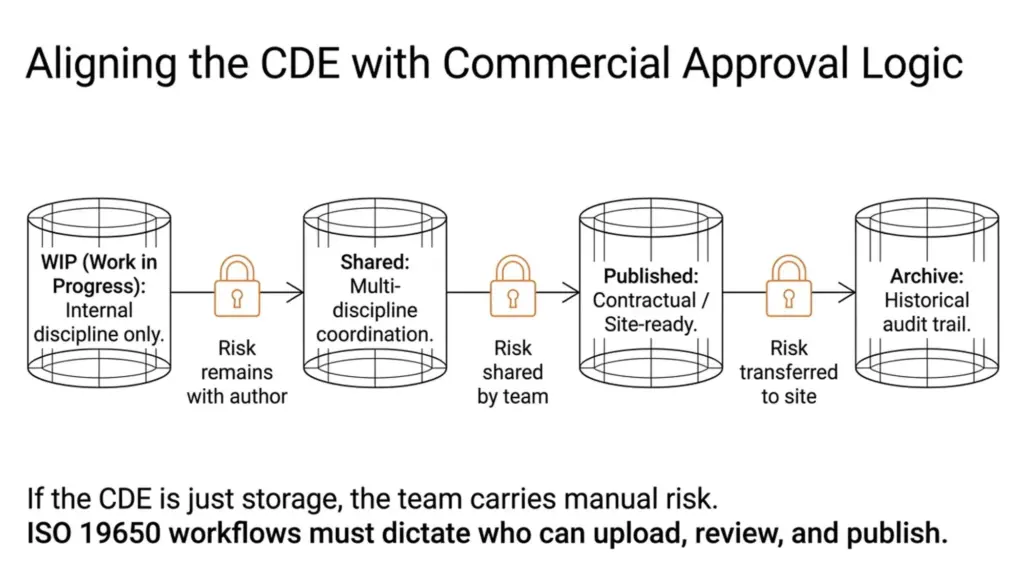
A good CDE workflow also makes information status visible to people who need to use it quickly. This is critical during tender, consultant coordination, construction issue, and handover.
If the CDE only acts as storage, the team still carries approval risk manually. That risk grows when more consultants, contractors, and subcontractors enter the workflow.
Train People Around Real Delivery Scenarios
Training people around real delivery scenarios means teaching them how to handle model status, parameters, issue ownership, approvals, and handover information during live project work.
A modeller needs to understand how parameters affect schedules and asset data. A project lead needs to know which information status can be issued. A BIM coordinator needs to know how issues are assigned and closed.
Scenario-based training is usually more useful than generic software training because it changes how people work when deadlines arrive.
Use External BIM Support When the Gap is Structural
External BIM support makes sense when internal teams can see delivery friction but do not have the time, standards, or coordination capacity to rebuild the workflow alone.
The gap may sit in BIM standards, model audits, Revit templates, family creation, CDE workflows, coordination routines, ISO 19650 alignment, or handover planning.
Interscale’s BIM services fit this point when those needs have to work together across consulting, implementation, management, coordination, and content creation.
A focused BIM review can help separate model problems from process problems, training gaps, and project governance issues.
Common Challenges — and Practical Ways Australian Firms Can Respond
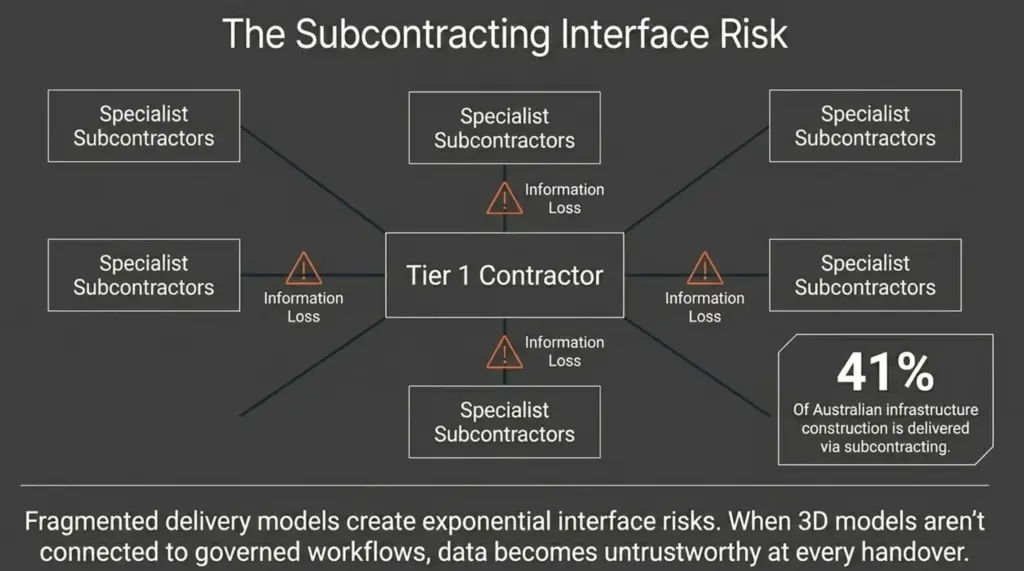
Common digital engineering challenges include BIM standards that are not followed, coordination that happens too late, unclear CDE permissions, and asset data that is defined after the project is already moving.
These problems usually start small. As more consultants, contractors, subcontractors, and asset owners enter the workflow, those small gaps become harder to control.
Challenge 1: BIM Standards Exist but are Not Followed
BIM standards are more likely to hold during delivery when they are short, visible, role-specific, and connected to daily model work.
For example, a 60-page standard may look strong during procurement. It may fail if project teams cannot apply it quickly during model setup, documentation, coordination, or issue closeout.
A realistic first step is to build shorter project BIM guides, model start-up checklists, template libraries, and regular model health reviews.
Challenge 2: Coordination Happens Too Late
Coordination needs a steady review rhythm before unresolved issues reach documentation, procurement, shop drawings, or site work.
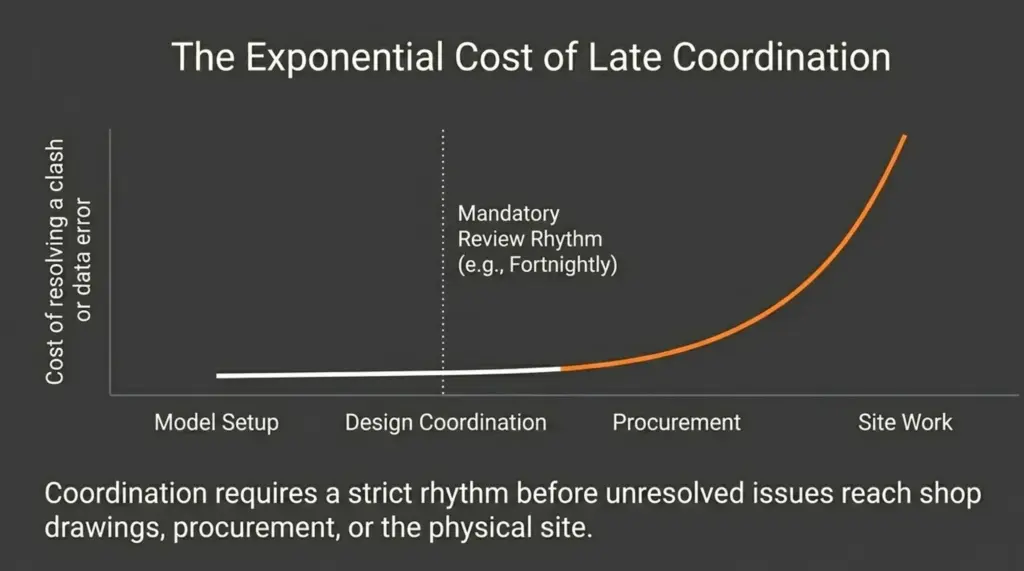
Clash detection helps, but clash detection alone does not create coordination discipline. Teams also need review cadence, issue ownership, tolerance rules, and clear closeout expectations.
A workable rhythm might include weekly model exchanges, fortnightly coordination reviews, issue owners by discipline, and a simple escalation rule for unresolved clashes.
Challenge 3: CDE Permissions and Status Codes are Unclear
CDE control improves when permissions, approval states, and information status are visible enough for teams to know what can be used.
A team should know whether information is work in progress, shared for coordination, published for use, or archived. That status should not depend on reading the file name twice or asking the project lead.
Firms can reduce this risk through clearer folder structures, approval gates, transmittal rules, and user permissions. These controls are basic, but they prevent real delivery confusion.
Challenge 4: Asset Data is Defined After the Project is Already Moving
Asset data should be defined early enough for design and delivery teams to collect it while the project record is still being built.
Asset owners often need information that design teams will not collect unless it is specified early. That may include maintainable asset IDs, equipment data, location references, O&M documents, warranties, inspection records, and model metadata.
Infrastructure NSW’s guidance makes this lifecycle link clear by connecting project information models with asset information models. That link is where digital engineering becomes design coordination, and protects the handover value of the information already being created.
Make BIM Information Reliable Before the Next Delivery Stage
Digital engineering BIM becomes valuable when project information can keep moving with confidence.
The model supports design and coordination, but the wider workflow decides whether that information remains clear enough for tender, construction issue, handover, and asset use.
For Australian AEC firms, the next step is to find where information starts losing trust. It may be model setup, coordination routines, CDE approvals, asset data, or handover preparation.
Once that weak point is visible, the improvement path becomes easier to define.
Interscale BIM management service supports Australia AEC teams that need BIM consulting, implementation, management, coordination, and content creation to work together as part of one delivery workflow.
Our support can help your teams strengthen standards, review model health, improve coordination habits, align CDE workflows, and prepare cleaner information for handover.
Or simply book a free discussion session with an Interscale BIM expert to review where your project information needs stronger control before the next delivery stage.
FAQ
What is Digital Engineering BIM?
Is Digital Engineering Only for Large Infrastructure Projects?
How Does ISO 19650 Support Digital Engineering?
When Should an AEC Firm Speak With a BIM or Digital Engineering Partner?
Sources:
- Infrastructure Australia. 2025 Infrastructure Market Capacity Report. Accessed 22 June 2026. https://www.infrastructureaustralia.gov.au/reports/2025-infrastructure-market-capacity-report
- NATSPEC. AS ISO 19650. Accessed 22 June 2026. https://www.bim.natspec.org/resources/bim-topics/40-as-iso-19650/276-as-iso-19651
- Infrastructure NSW. NSW Infrastructure Digitalisation and Data Policy Guide. Accessed 22 June 2026. https://www.infrastructure.nsw.gov.au/media/bnvpzll4/insw_nsw-idd-policy-guide_wcag.pdf
- Infrastructure Victoria. Digital Technology and Infrastructure Productivity. Accessed 22 June 2026. https://assets.infrastructurevictoria.com.au/assets/240913-Digital-technology-and-productivity-report-FINAL.pdf
- Victorian Government. Digital Twin Victoria. Accessed 22 June 2026. https://www.land.vic.gov.au/maps-and-spatial/digital-twin-victoria